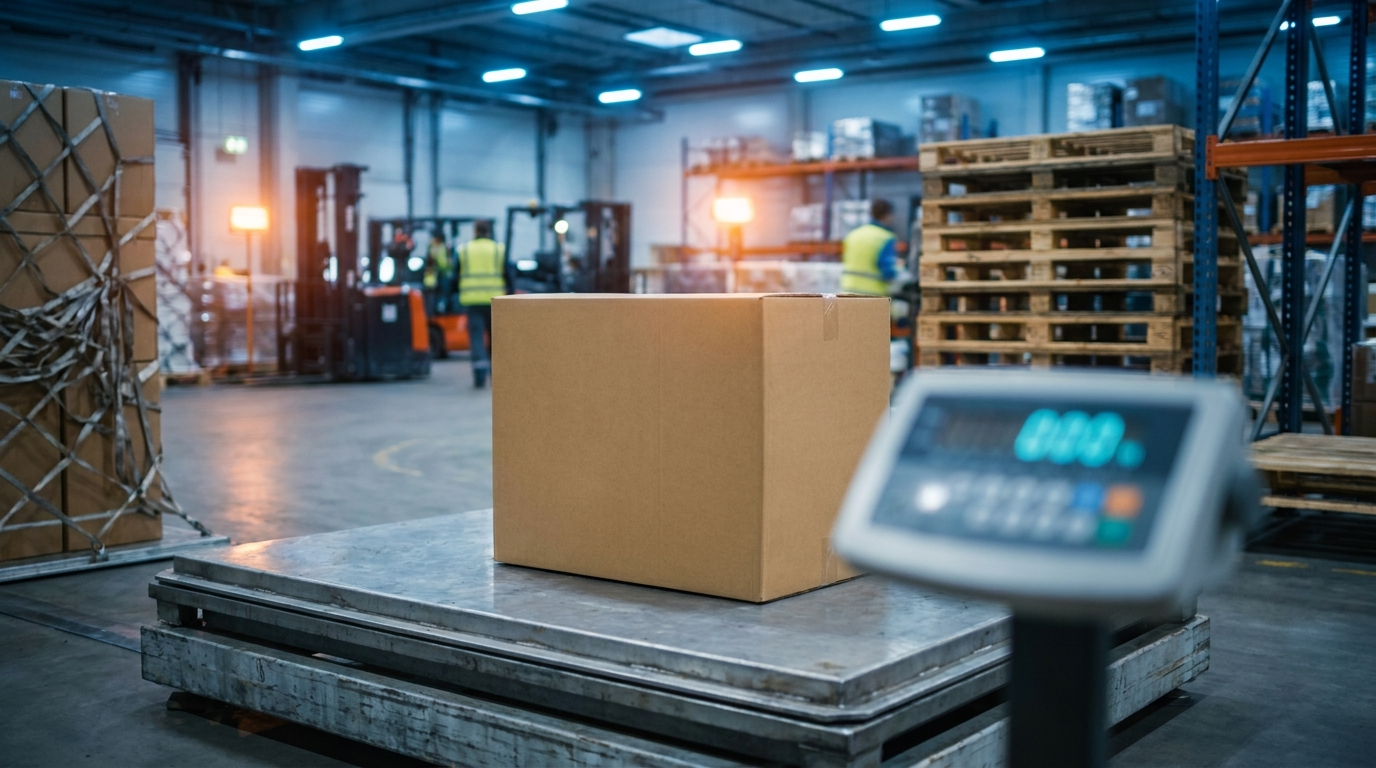
Air freight has a pricing rule that surprises every new importer: you don't necessarily pay for what your cargo weighs. You pay for the greater of two numbers — and one of them is about space, not mass.
The two weights
Actual gross weight is what the packed cartons weigh on a scale. Volumetric (dimensional) weight converts the space they occupy into kilograms: for standard air freight, multiply each carton's length × width × height in centimetres and divide by 6,000. Express couriers typically divide by 5,000, which makes bulky parcels even more expensive per unit of space.
The rule
The chargeable weight is whichever is higher — actual or volumetric — calculated across the shipment. Dense cargo (tools, hardware, books) pays on the scale. Light, bulky cargo (pillows, plastic goods, empty containers of any kind) pays on volume.
A worked example
- Carton: 60 × 50 × 40 cm, actual weight 6 kg
- Volumetric: 60 × 50 × 40 ÷ 6,000 = 20 kg
- Chargeable weight: 20 kg — more than three times the scale weight
- Fifty such cartons: billed at 1,000 kg, not 300 kg
How to reduce it
Packaging is the lever. Vacuum-pack soft goods; remove retail boxes where the destination allows and ship them flat; choose carton sizes that fit the product instead of the supplier's leftover stock; and never ship air. On loosely packed market goods, repacking at our consolidation warehouse routinely reduces billable volume meaningfully — savings that go straight off the freight bill.
When density changes the method
Chargeable weight also decides which method is smart. Very light-bulky cargo can be so expensive by air that sea freight wins even for modest volumes; very dense cargo can fly for less than you expect. Send us carton dimensions and weights with your quote request and we calculate both figures for you — before the airline does.